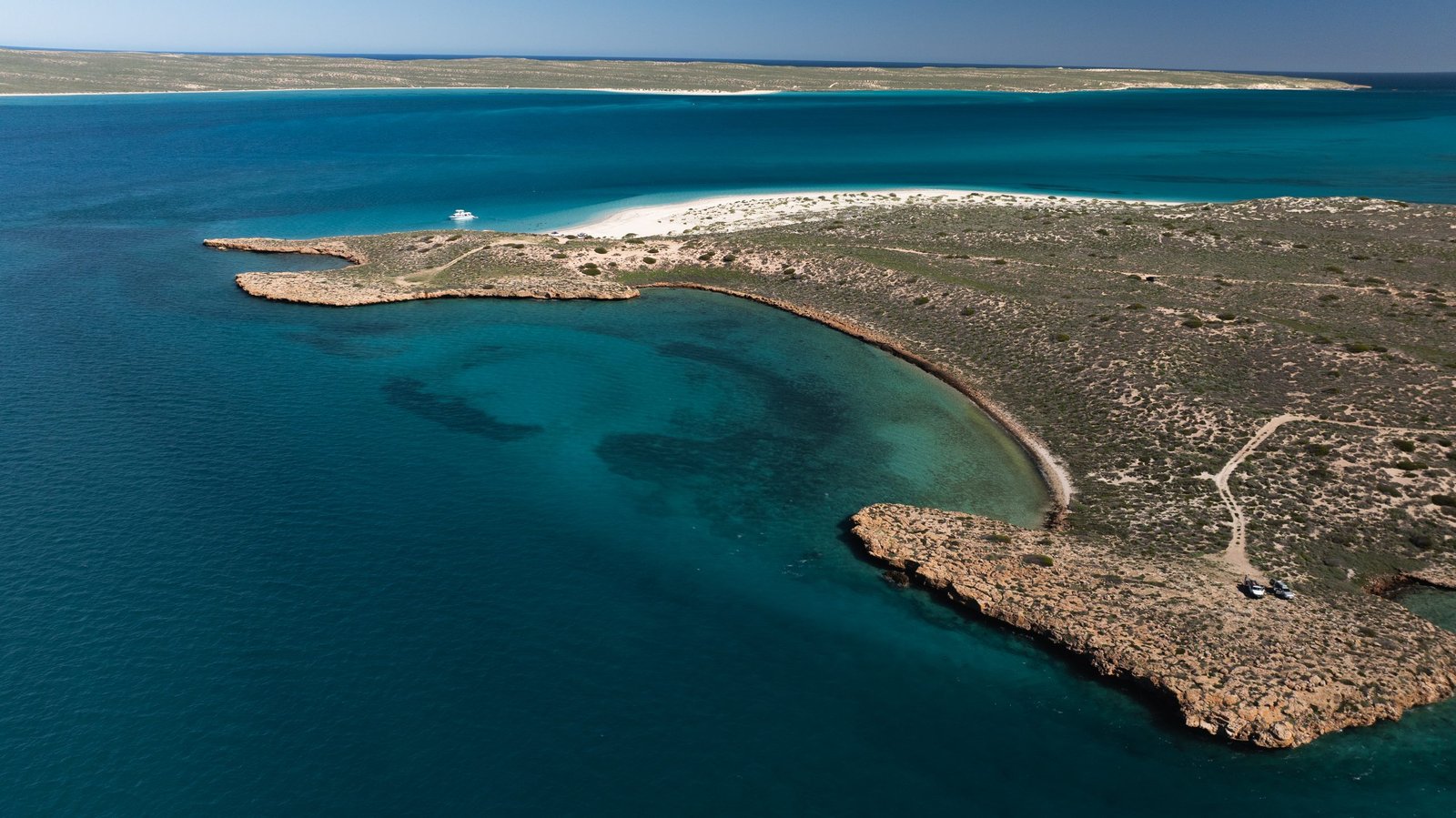
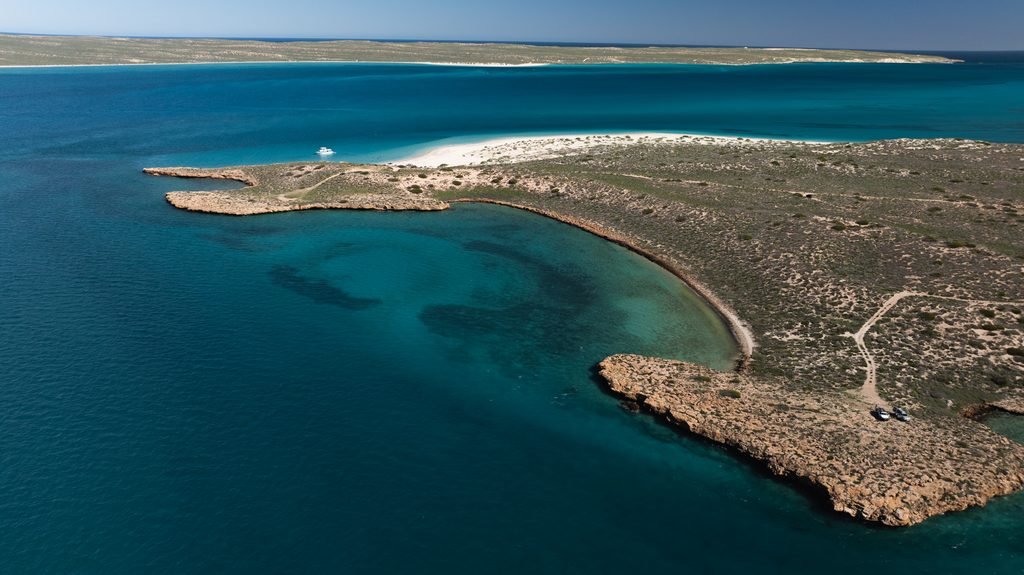
Shark Bay sits at the westernmost point of the Australian mainland, and it doesn’t feel like anywhere else. Turquoise shallows meet rust-red dunes, wild dolphins swim right up to the shore, and some of the oldest living organisms on Earth are still quietly growing in a bay you can walk right up to. It’s one of only a handful of places on the planet to earn UNESCO World Heritage status on all four natural criteria — for its wildlife, its landscapes, its ecological processes, and its living fossils.
If you’re planning a trip, here’s what to know before you go — from a local’s perspective at Shark Bay Eco Tours.
Where Is Shark Bay, and How Do You Get There?
Shark Bay is roughly 800 km north of Perth, out on the Gascoyne coast of Western Australia. Most visitors base themselves in Denham, the region’s small hub town, or at Monkey Mia, about 25 km further along the peninsula.
You’ve got two realistic options for getting here:
- Fly: Shark Bay Airport (MJK) has regular flights from Perth, cutting the trip down to about two hours.
- Drive: The self-drive route from Perth takes around 8 hours, following the North West Coastal Highway before turning off toward Denham. It’s a proper road trip — pack snacks, fuel up when you can, and budget an overnight stop if you’d rather not do it in one go.
When to Visit
Shark Bay is a year-round destination, which is part of its appeal — but the seasons do feel different out here.
- Autumn and spring (April–May, September–October) bring the mildest days and are widely considered the sweet spot for comfortable exploring, swimming, and wildlife watching.
- Winter (June–August) is cooler and dry, and it’s whale season further along the coast if that’s on your list.
- Summer (December–February) gets hot and can be humid, though the water is at its most inviting if you’re happy to plan around the heat.
Whenever you go, mornings are prime time — the light is softer for photos, and the dolphins at Monkey Mia are most active early in the day.
The Wild Dolphins of Monkey Mia
This is the reason Monkey Mia became famous in the first place. A small pod of wild bottlenose dolphins has been visiting the shallows here for generations, a tradition that’s now carefully managed by park rangers to protect the dolphins’ natural behaviour. Rangers run the interactions each morning, usually between roughly 7:45 am and midday, with a limited number of visitors selected to help with a feed.
A good thing to know: this isn’t a performance or an aquarium encounter. The dolphins come and go as they please, so no two mornings look exactly the same.
Stromatolites: The Oldest Living Things You’ll Ever See
At Hamelin Pool, hypersaline water has created one of the only places on Earth where you can still see living stromatolites — layered mineral structures built up by microorganisms, similar to the earliest life forms that shaped our planet’s atmosphere billions of years ago. They grow at a glacial pace, roughly a third of a millimetre a year, so the ones you’re looking at have been quietly forming for millennia.
They’re not flashy. From a distance they look like dark, rounded rocks at the water’s edge. But knowing what you’re actually looking at — living relatives of the organisms that made complex life on Earth possible — tends to change how visitors see them. A boardwalk lets you view them without disturbing the pool, so stick to the path.
Shell Beach: A Coastline Made of Nothing But Shells
A short drive from Hamelin Pool, Shell Beach is exactly what it sounds like: over 100 km of coastline made entirely of tiny white cockle shells, in places piled metres deep. It’s one of only two beaches like it in the world. The water here is unusually salty, which is part of why the shells have built up so densely over time — and it makes for a strange, almost buoyant swim if you’re up for it.
Francois Peron National Park
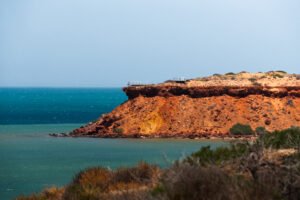
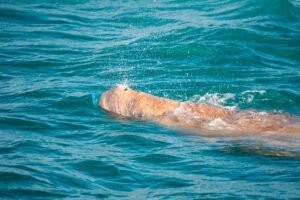
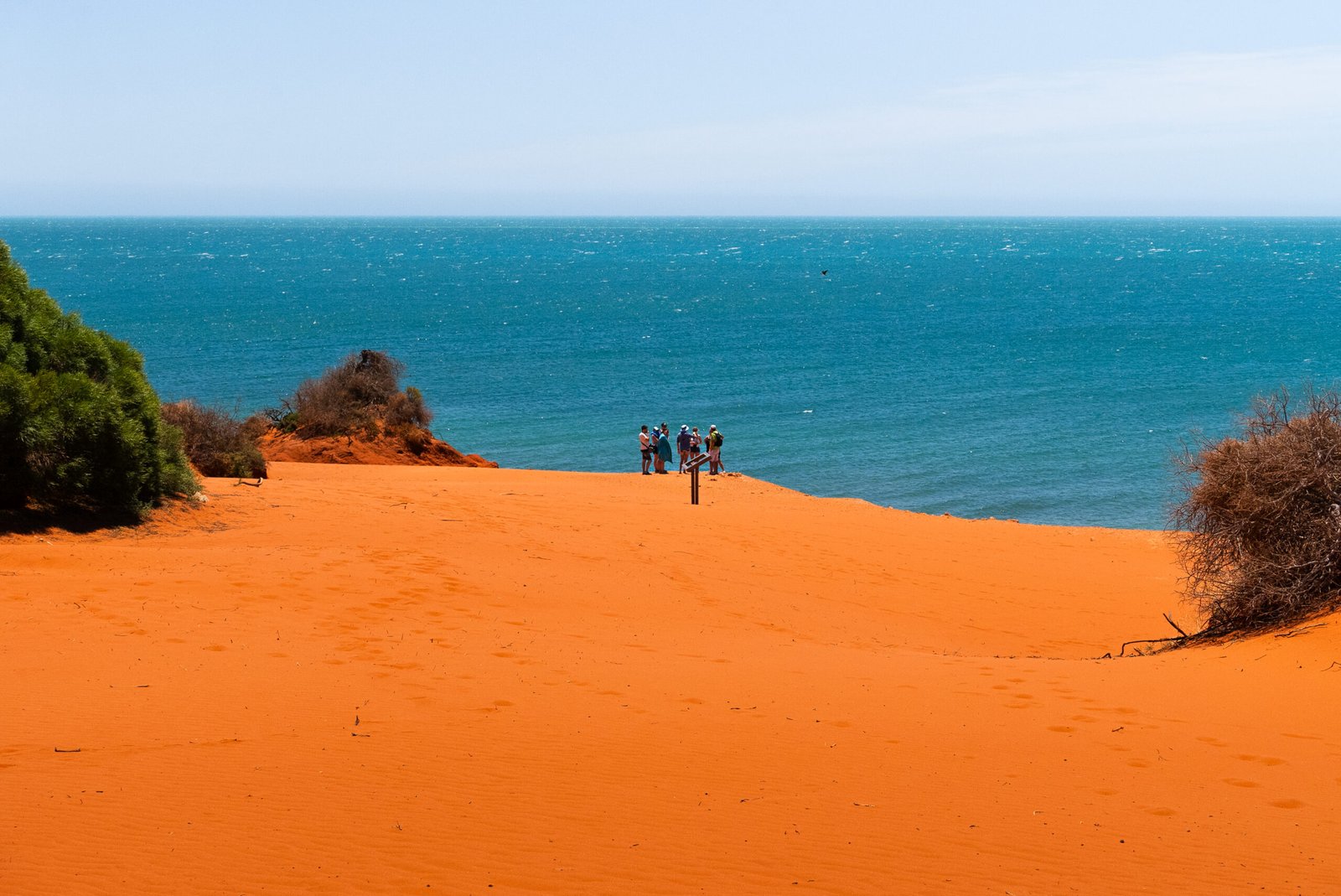
If you want a taste of the outback against the ocean, Francois Peron National Park delivers it — deep red dunes rolling straight down into bright turquoise water. Much of the park requires a 4WD, particularly through the soft sand tracks, so check your vehicle and conditions before heading in. It’s also one of the best spots in the region for spotting wildlife, including the dugongs that graze the seagrass meadows offshore — Shark Bay is home to a significant share of the world’s dugong population.
Practical Things to Know Before You Go
A few details worth sorting before you arrive:
- Book accommodation ahead, especially around school holidays — Denham and Monkey Mia are small, and beds fill up fast.
- Fuel and supplies are limited once you’re out on the peninsula, so top up in Denham and don’t assume you’ll find a servo around every corner.
- Sun protection is non-negotiable. The WA sun is strong year-round, and there’s little shade on the beaches or the dune tracks.
- Respect the wildlife guidelines at Monkey Mia — rangers are strict about how visitors interact with the dolphins, and it’s for the animals’ benefit, not just tourists’ safety.
- Mobile reception is patchy away from the main towns, so download maps and let someone know your plans if you’re heading into the national park.
- This is Malgana Country. Shark Bay’s traditional name is Gathaagudu, meaning “two waters,” and the region’s Aboriginal history stretches back tens of thousands of years — worth keeping in mind as you explore.
How Many Days Do You Need?
Most visitors find 3–5 days is enough to see the highlights without rushing — a day or two around Monkey Mia and Denham, a day out at Hamelin Pool and Shell Beach, and a day exploring Francois Peron. If you’ve got the time, stretching it to a week lets you slow down and actually sit with the place rather than ticking off a list.
Ready to see it for yourself? Shark Bay Eco Tours runs small-group trips to Monkey Mia, Hamelin Pool, and Francois Peron — get in touch to plan your visit.